Yes. Typo Snowboard 2017
But fear not - there is plenty to explore...
Yes. Typo Snowboard 2017
Model Info
FREE SHIPPING
This item qualifies for Free Shipping! Details.
Yes. Typo Snowboard 2017
MEMBERSHIP
Earn up to 10% back in rewards. Join Free.
EASY RETURNS
Take up to a full year to return your item! See our Return Policy.
LOWEST PRICE GUARANTEE
Find a better price? We’ll beat it by 5%. See our Price Match Policy.
Product Info

As the older brother to the Yes. Basic Snowboard, the Yes. Typo Snowboard features the same user-friendly Underbite edges with the addition of a larger profile, a 5mm setback and a stiffer flex. With the addition of directionally-favored specs, you can take jumps to the deep end, feast on fresh pow for breakfast and crank up the speed without exiting your comfort zone. Built for more aggressive riders, the Yes. Typo Snowboard is an exceptional snowboard for riders that want to shred everything in sight.
Product Details
Rocker Type
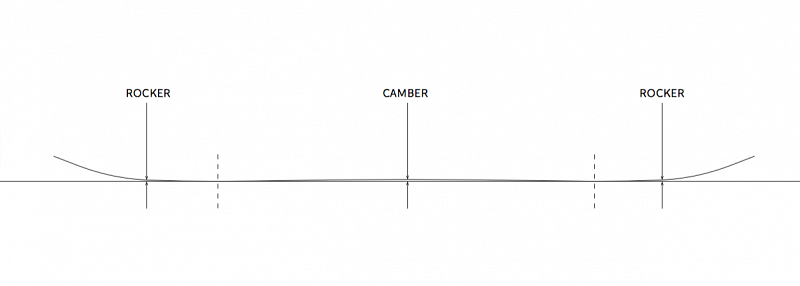
CamRock 4-4-4 – Rocker in the tip and tail, camber underfoot.
Flex
4 – (1 Soft - 5 Stiff)
Shape
Directional Twin Shape – A versatile shape, performs best ridden regular but also rides well switch. The nose is slightly longer than the tail.
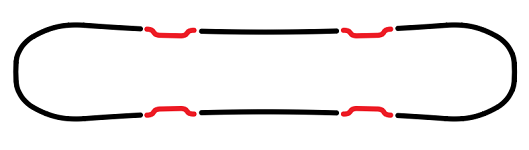
Und3rbite – Creating divots inward at the binding area reduces and disrupts the surface area of the edge that has contact with the snow while the board is turning. This increases the edge pressure by distributing your weight/energy in the areas where you need it -- from the binding out, and through the center of the board where the carving arc is taking place. This segmentation of the sidecut into 3 key zones focuses your body weight onto areas that initiate, hold, and release turns.
Core
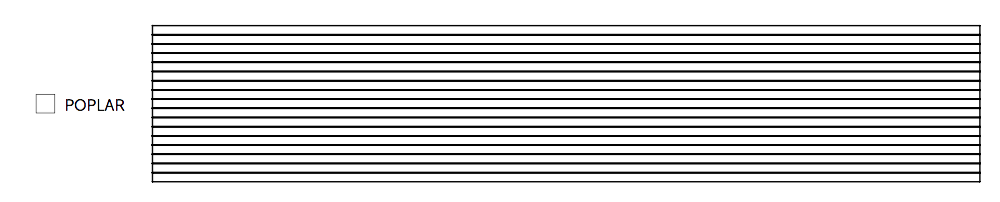
Full Poplar Core – Yes.' baseline core for tip-to-tail woodcore snowboard construction. Strikes a predictable balance between durability, consistent flex, and lightweight feel.
Laminates
Biaxial Fiberglass
Base
Sintered Spec – Yes. calls it Sintered Spec because it’s hardness and chemical properties are very close to true sintered and it’s on-snow performance is also very close to true sintered - but it’s formed using the extrusion process. How? – Well the raw material is actually pre- consumer recycled (meaning it never left the factory) sintered base material. So while the heating and extrusion process has softened it slightly, it’s still much harder than true Extruded.
Binding Compatibility
2 x 4 Insert Pack
Specs
-
Terrain:
All-Mountain
More
Terrain
All-Mountain All-mountain snowboards are designed for exploring the whole mountain. They are your go-to for a snowboard that will do anything. They feel at home on groomers, powder, park runs and almost anything in between. The vast majority of snowboarders choose all-mountain boards for their great versatility. If you’re just getting started or unsure of exactly what you need, an all-mountain snowboard is a great choice.
-
Ability Level:
Intermediate-Advanced
More
Ability Level
Intermediate-Advanced Whether you’re a progressing intermediate exploring new runs and terrain, or an accomplished rider seeking new thrills, the majority of skiers and snowboarders fall into this level. Intermediate to advanced skis and snowboards may be somewhat wider or stiffer than beginner-intermediate skis and snowboards, usually with a stronger wood core and sandwich sidewall construction. Intermediate to advanced boots and bindings range from softer flexing freestyle options to stiffer choices built for stability at speed.
-
Rocker Type:
Rocker/Camber/Rocker
More
Rocker Type
Rocker/Camber/Rocker Rocker/Camber/Rocker shapes seek to give you both hard-carving edgehold on firm snow from camber underfoot with enhanced turnability and float in powder from the rockered tip and tail. This profile is increasingly popular for freeride boards designed primarily for soft snow.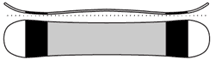
- Shape: Directional Twin
-
Flex Rating:
Stiff
More
Flex Rating
Stiff The amount a snowboard flexes varies significantly between boards. Snowboard flex ratings are not necessarily standardized across manufacturers, so the flex may vary from brand to brand. Many manufacturers will give a number rating ranging from 1-10, 1 being softest and 10 being stiffest. Here at evo we have standardized the manufacturers' number ratings to a feel rating ranging from soft to very stiff. Generally you will find flex ratings of 1-2 as soft, 3-5 as medium, 6-8 as stiff, and 9-10 as very stiff. Flex ratings and feel may ultimately vary from snowboard to snowboard.
- Binding Mount Pattern: 2x4
- Core/Laminates: Wood
- Warranty: Limited Lifetime

| Size (cm) | 149 | 152 | 155 | 156W | 158 | 159W | 161 | 163W |
| Effective Edge (mm) | 1130 | 1150 | 1175 | 1185 | 1200 | 1200 | 1220 | 1230 |
| Tip Width (mm) | 291.3 | 293.7 | 295.4 | 302.89 | 298.1 | 306.1 | 299.1 | 307.7 |
| Waist Width (mm) | 248 | 250 | 251 | 259 | 253 | 261 | 254 | 263 |
| Tail Width (mm) | 291.3 | 293.7 | 295.4 | 302.9 | 298.1 | 306.1 | 299.1 | 307.7 |
| Sidecut Radius (m) | 7.7 / 7 / 7.7 | 7.9 / 7.2 / 7.9 | 8.1 / 7.4 / 8.1 | 8.2 / 7.5 / 8.2 | 8.3 / 7.6 / 8.3 | 8.3 / 7.6 / 8.3 | 8.5 / 7.8 / 8.5 | 8.6 / 7.9 / 8.6 |
| Stance Setback (mm) | 5 | 5 | 5 | 5 | 5 | 5 | 5 | 5 |
| Stance Range (in) | 20.4-23.6 | 20.9-24.1 | 21.4-24.6 | 21.4-24.6 | 21.9-25.1 | 21.9-25.1 | 22.4-25.6 | 22.4-25.6 |
| Width | Regular | Regular | Regular | Wide | Regular | Wide | Regular | Wide |