Yes. Standard Snowboard 2018
But fear not - there is plenty to explore...
Same Model, Different Year
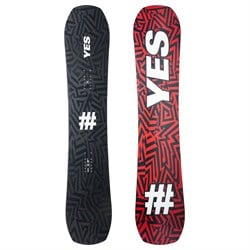
Yes. Standard Snowboard 2018
Model Info
FREE SHIPPING
This item qualifies for Free Shipping! Details.
Yes. Standard Snowboard 2018
MEMBERSHIP
Earn up to 10% back in rewards. Join Free.
EASY RETURNS
Take up to a full year to return your item! See our Return Policy.
LOWEST PRICE GUARANTEE
Find a better price? We’ll beat it by 5%. See our Price Match Policy.
-
-
Same Model, Different Year
Product Info

A real trickster, the Yes. Standard Snowboard enters this year with a tweaked design and more than meets the eye. At first glance, the Standard looks like a "standard" twin shape, but actually uses Yes.' Directional Volume Twin outline and a new Midbite profile for a slightly wider tip than tail. This new shape, combined with the setback inserts, gives you some serious freeride chops when the need arises. Upgrade to the Yes. Standard Snowboard and you'll quickly understand that the Yes. standard's a bit higher than most.
Product Details
Rocker Type
CamRock 3-4-3 – Rocker in the tip and tail, camber underfoot.
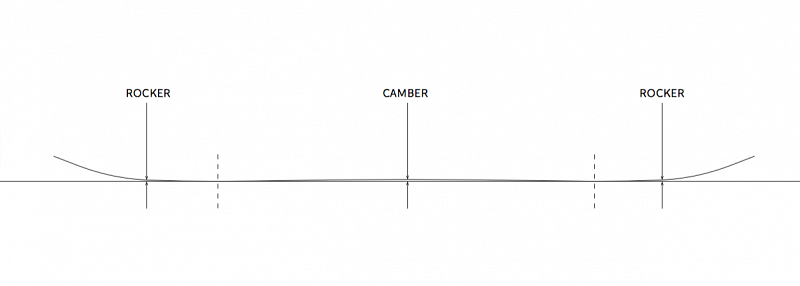
Flex
Flex: 4.5 – (1 Soft - 5 Stiff)
Shape
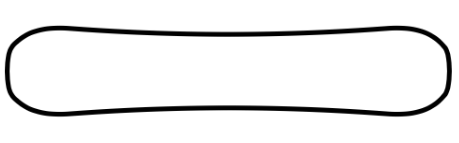
True Twin – A completely symmetrical outline houses a centered stance that is effective on edge, a tip and tail, and is identical at both ends of the board. The radial sidecut is effective and predictable. The overall shape allows complete freedom of expression by keeping the board a neutral, yet responsive board.
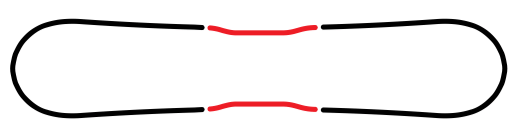
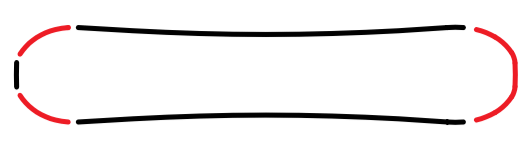
Midbite – Midbite blends the response of a narrow waist width with the stability of wider nose and tail. Stepping the outline of the board inward 1.5mm just inside the insert pack. This step remains (rather than bumping back out) down about 1/3 the length of the sidecut until just inside the next insert pack. This single long disruption of the sidecut between the bindings cheats the waist width narrower, providing quicker edge-to-edge response. From the binding out to the end of the sidecut, Yes. maintains a board width that is a stable platform for popping, spinning, and landing.
Directional Volume Twin – As the lines between freeride and freestyle continue to erase, Yes. had to address the needs of those committed to riding twins but finding themselves in more pow. Nose and tail volume is hard to notice in hardpack unless you're nose/tail pressing, but in pow it affects flotation and you can feel it. This led to the simple idea of the Directional Volume Twin. Including symmetrical flex, centered stance, identical wide points of the board, and identical shovel lengths but with a slightly lower volume tail.
Core
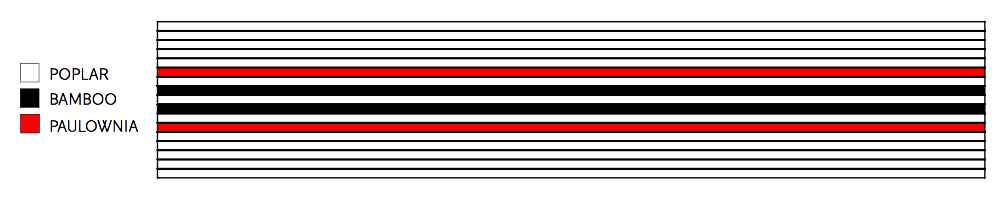
Poplar + Bamboo – A lighter, more responsive core than the Full Poplar. Poplar + Bamboo uses the same durable core, but lightens it up by replacing 30% of the Poplar with Paulownia with the addition of two bamboo stringers down the full length for added pop and response.
Laminates
Triax Glass
Base
Sintered True – Pellets or course powder are pressed until they form a solid. There are several suppliers in the industry and each have different codes depending on their color and transparency. These codes can make it seem like you're getting many different kinds of sintered bases, but they're all pretty much the same. The Sintered True base is harder and more expensive than an extruded base and can be faster for those that ride aggressively. But to do that, it needs to be waxed and prepared for local conditions.
Binding Compatibility
2x4 Insert Pack + Backseat Inserts – An extra row of inserts located behind the main set for those morning-after-a-huge-dump days. Slam those binders back and let your rear leg breathe.
Specs
-
Terrain:
Freestyle, All-Mountain
More
Terrain
Freestyle Freestyle or park snowboards tend to be a bit shorter in length and love terrain parks, rails, jibs, trash cans, tree trunks, riding switch (non-dominant foot forward), wall rides and more. Freestyle boards often feature a true twin shape, and are typically selected by those looking to ride the terrain park. A more versatile variant of a freestyle board is the all-mountain freestyle, which combines the versatility of an all mountain snowboard with the playfulness of a freestyle snowboard. All-Mountain All-mountain snowboards are designed for exploring the whole mountain. They are your go-to for a snowboard that will do anything. They feel at home on groomers, powder, park runs and almost anything in between. The vast majority of snowboarders choose all-mountain boards for their great versatility. If you’re just getting started or unsure of exactly what you need, an all-mountain snowboard is a great choice.

-
Ability Level:
Advanced-Expert
More
Ability Level
Advanced-Expert Whether you charge the steepest lines, hit the biggest jumps in the park or carve with race-like precision, advanced to expert level skis, snowboards, boots and bindings are for the more aggressive rider. In skis and snowboards, you'll often find layers of metal, carbon or other stringers for rigidity and power, while advanced to expert level boots and bindings are usually on the stiffer side of the spectrum for rebound and precision steering.
-
Rocker Type:
Rocker/Camber/Rocker
More
Rocker Type
Rocker/Camber/Rocker Rocker/Camber/Rocker shapes seek to give you both hard-carving edgehold on firm snow from camber underfoot with enhanced turnability and float in powder from the rockered tip and tail. This profile is increasingly popular for freeride boards designed primarily for soft snow.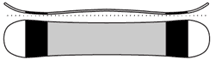
- Shape: True Twin
-
Flex Rating:
Very Stiff
More
Flex Rating
Very Stiff The amount a snowboard flexes varies significantly between boards. Snowboard flex ratings are not necessarily standardized across manufacturers, so the flex may vary from brand to brand. Many manufacturers will give a number rating ranging from 1-10, 1 being softest and 10 being stiffest. Here at evo we have standardized the manufacturers' number ratings to a feel rating ranging from soft to very stiff. Generally you will find flex ratings of 1-2 as soft, 3-5 as medium, 6-8 as stiff, and 9-10 as very stiff. Flex ratings and feel may ultimately vary from snowboard to snowboard.
- Binding Mount Pattern: 2x4
- Core/Laminates: Bamboo, Wood
- Athletes: Romain de Marchi, Austen Sweetin
- Warranty: Limited Lifetime


| Size (cm) | 149 | 151 | 153 | 156 | 159 |
| Effective Edge (mm) | 1106 | 1123 | 1138 | 1163 | 1188 |
| Tip Width (mm) | 289.4 | 292.5 | 298.7 | 304.5 | 310.2 |
| Waist Width (mm) | 245 | 248 | 253 | 258 | 263 |
| Tail Width (mm) | 289.4 | 292.5 | 298.7 | 304.5 | 310.5 |
| Sidecut Radius (m) | 7.15 | 7.35 | 7.35 | 7.55 | 7.75 |
| Stance Setback (in) | 0 | 0 | 0 | 0 | 0 |
| Stance Range (in) | 17.9 - 21.1 | 18.4 - 21.6 | 18.9 - 22.1 | 19.9. - 23.1 | 20.9 - 24.1 |
| Width | Regular | Regular | Regular | Regular | Regular |