


2026 Santa Cruz Bullit 4 Review
By: Thomas Beamish-Lavoie, evo Crew Whistler | June 26th, 2025
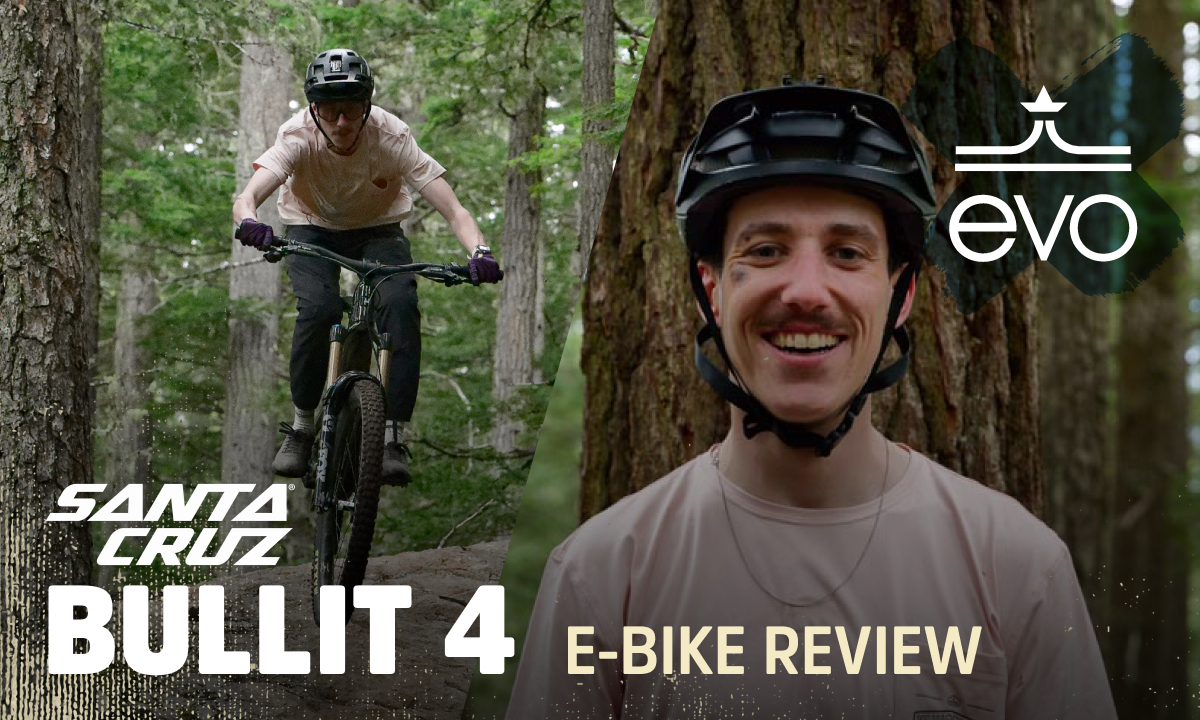
To see firsthand how the Bullit performs, I spent a week riding some of my favorite trails around the Whistler valley, getting a feel for its climbing performance, descending capabilities, power delivery and general riding characteristics.
|
Mixed Wheel (29" Front / 27.5" Rear) |
Updated Bosch Performance Line CX Drive Unit |
|
170mm Fork / 170mm Rear Travel |
Integrated 600Wh Battery |
|
63.3° Head Tube Angle (Lo) |
Independently Adjustable Geo and Progression Chips |
|
Sizes: S - XXL |
Lifetime Warranty on Frame & Bearings |
Technical Details
This year’s Bullit is built on a completely different suspension platform to previous iterations, utilizing a 4-bar linkage instead of the VPP linkage synonymous with the brand. This design change was first seen on the Vala last year (featuring the same Bosch powertrain) and proved to be a great success. This is the burliest and longest travel ebike Santa Cruz has released, running 170mm of travel front and rear, powered by Bosch’s Performance Line CX motor. To ensure consistent ride characteristics across all sizes, each size comes with proportional chainstays. All builds come in at under 50lbs too!
Construction and Features
Each Bullit frame is fabricated using high quality carbon fibre, with an option for an even higher-grade carbon layup, which shaves off a bit of weight also available. As we’ve come to expect from Santa Cruz, the Bullit uses robust and easy to service bearings stored in its burly linkage, which helps negate any torsional flex within the kinematics to make sure the only weak point in the bike is the rider themselves! All pivot points on the bike use large-diameter sealed cartridge bearings, while the main frame pivots use oversized hollow axles and locking hardware. The Bullit is powered by Bosch’s CX Gen 5 motor capable of 85Nm of torque and a peak power output of 600W, and uses a 600wh battery to keep the party going all day long. The Bosch system has 4 riding modes, Eco, Tour, eMTB, and Turbo, each offering a different level of assist, and can be changed through using the remote on the handlebars or the toptube display. The Bullit rolls exclusively on a mixed set of wheels, using a 29in up front and a 27.5in on the rear.
Suspension Design
As we saw with the Vala last fall, Santa Cruz has opted for a 4-bar suspension linkage instead of their VPP platform we have become used to seeing from the brand. This design choice was made to prioritize riding performance and was built around the powerful Bosch motor, which allows the Bullit to carry a lower center of gravity and has the added bonus of deeper seat-tube insertion. The lower center of mass on the bike is meant to provide better traction and to be more neutral under braking and pedalling inputs, eliminating unwanted movement to maximize suspension performance.
Geometry and Sizing
The new Bullit underwent a number of geometry tweaks to its predecessor and gives you the option to adjust a Geo chip and Progression chip independently of each other, giving you the ability to slacken the head and seat angles by nearly half a degree and drop the bottom bracket by 4mm, and adjust the leverage ratio of your shock from 26% to 29%. Compared to the previous iteration of the Bullit, this year’s model sports a slightly slacker headtube angle and steeper seat tube angle. Another significant update is the introduction of size-specific rear-ends which range from 440mm on the small size, up to 452mm on the XX-Large. The Bullit also benefits from improved seatpost insertion, thanks to the four-bar suspension layout and the removal of the shock tunnel which would’ve been present with VPP, allowing for longer-stroke dropper posts to be used on every frame size.


Build Kits
The Bullit is available in four different builds, each tailored for a specific customer at a different price point.
The base Eagle 70 build has all the quality parts as the others — Bosch motor, Maxxis tires, big rotors — but with a more basic fork and shock, and less aggressive Sram brakes. The Sram Transmission is not wireless on this kit, opting for the tried-and-true gear cable. This build carries a smaller price tag and would be an ideal option for someone looking to get on a Bullit but isn’t too fussed about going down the suspension rabbit hole and isn’t pushing to the absolute limit on every ride.
The Eagle 90 build sees an upgrade on the suspension, opening up more options for compression and rebound tuning. The Sram transmission remains cabled on this option, but the brakes get upgraded to the base model Maven, Sram’s flagship downhill brake. This would be suitable for someone who wants a bit more tunability and performance without getting into a wireless drivetrain and full factory suspension setup.
The GX AXS build gives you everything the Eagle 90 kit does, but with a wireless GX AXS transmission drivetrain.
Now, if you want to get the best possible performance out of your Bullit, the X0 AXS RSV is the one to consider, as you’ve opened up your ability to fine tune the Fox 38 fork and Float X2 shock to their fullest potential. This build comes with Santa Cruz’s carbon CC frameset, utilizing higher quality carbon fibers, and rolls on carbon Reserve wheels laced to DT Swiss hubs. The drivetrain is the top of the line Sram X0 Transmission, and the whole party can be brought to a stop with Sram’s Maven Ultimate brakes.
|
Eagle 70
|
Eagle 90
|
GX AXS
|
X0 AXS RSV
|
|
| Frame |
Carbon C
|
Carbon C
|
Carbon C
|
Carbon CC
|
| Fork |
RockShox Zeb Base
|
FOX 38 Float Performance
|
Fox 38 Performance Elite
|
Fox 38 Factory
|
| Shock |
Fox Float X Performance
|
Fox Float X Performance
|
Fox Float X Performance Elite
|
Fox Float X2 Factory
|
| Drive Unit |
Bosch Performance CX
|
Bosch Performance CX
|
Bosch Performance CX
|
Bosch Performance CX
|
| Battery |
Bosch PowerTube Battery 600Wh
|
Bosch PowerTube Battery 600Wh
|
Bosch PowerTube Battery 600Wh
|
Bosch PowerTube Battery 600Wh
|
| Drivetrain |
SRAM Eagle 70
|
SRAM Eagle 90
|
SRAM GX AXS
|
SRAM X0 AXS
|
| Brakes |
SRAM DB8 Stealth
|
SRAM Maven Base
|
SRAM Maven Bronze
|
SRAM Maven Silver
|
| Rotors |
SRAM Centerline
220mm Front, 200mm Rear |
SRAM HS2
200mm Front & Rear |
SRAM HS2200mm Front & Rear
|
SRAM HS2
200mm Front & Rear |
| Rims |
Reserve 30 HD AL
|
Reserve 30 HD AL
|
Reserve 30 HD AL
|
Reserve 30 HD Carbon
|
| Hubs |
SRAM MTH
|
E13 SL E-Spec
|
E13 SL E-Spec
|
DT Swiss 350
|
| Front Tire |
Maxxis Assegai 2.5"
3C MaxxGrip, DoubleDown |
Maxxis Assegai 2.5"
3C MaxxGrip, DoubleDown |
Maxxis Assegai 2.5"
3C MaxxGrip, DoubleDown |
Maxxis Assegai 2.5"
3C MaxxGrip, DoubleDown |
| Rear Tire |
Maxxis Minion DHRII 2.5"
3C MaxxTerra, DoubleDown |
Maxxis Minion DHRII 2.5"
3C MaxxTerra, DoubleDown |
Maxxis Minion DHRII 2.5"
3C MaxxTerra, DoubleDown |
Maxxis Minion DHRII 2.5"
3C MaxxTerra, DoubleDown |
| Shop | Shop | Shop | Shop |


Ride Impressions
Test Bike Setup
I was fortunate enough to get my hands on the X0 AXS RSV build in size L, and kept the geo and progression chip in the high setting, as they come from the factory. I set the suspension up based on the charts provided on the Fox website, and kept the rebound and compression rate relatively neutral. After a couple of laps to familiarize myself , I did not feel the need to change the geo or progression chip to the lower position as I felt like I had more than enough stability on descent, and preferred having the bottom bracket at its current height. My recommendation is to run the bike in the high positions, as the bike is stable and planted enough as it is, and the bottom bracket may suffer from clearance issues in the low position if you’re taking on some janky and rough terrain.
I tested the Bullit all over the Whistler valley and rode a variety of different trails to truly get to know how this bike handles. I did some long rides cycling through all the different power modes, and some short rides where I only used eMTB and Turbo. Having reviewed the Santa Cruz Vala when it was released last year, I was well equipped to compare riding characteristics against its shorter travel sibling.
Climbing / Uphill
The climbing performance of the Bullit is hampered slightly by the longer travel when compared to the Vala, as it loses some agility and nimbleness navigating through tricky sections.The Bosch powertrain is the real superstar on the climb, as the power delivery feels incredibly natural and lacks any sort of input lag. Riding in eMTB mode really showcases the Bullit’s climbing capabilities since the Bosch motor can dynamically put down the power, limiting times when too much juice is delivered, which can cause you to loop-out. Anyone who has ridden an ebike with the Performance Line CX motor can attest to just how quiet it sounds — no unnecessary rattling or harsh noises, just the smooth hum of a bike doing all the hard work. The bike never felt like it was underpowered or needed more torque, it simply did everything I asked of it and worked in perfect harmony with my inputs.
After experiencing both the Vala and the Bullit, I can say the former climbs a little better, although the Bullit is no slouch. Both bikes are fantastic and get the job done, but the Bullit is undoubtedly beefier and focused more on the descent, whereas the Vala is more of an all-rounder. The Bullit is fantastic for speeding up forest service roads and getting you to the top of the trail, while the Vala handles climbing trails with a bit more grace.


Descending / Downhill
The descent is really why I go out riding, so to have a bike that’s basically a downhill bike with a motor is a dream. It's obvious the Bullit engineered to dominate the descents, and dominate it did! The 170mm travel design breathes confidence into your riding, and it feels like you’ve got all the suspension in the world at your disposal.
The first thing I noticed when riding was just how much grip this thing has — it’s ridiculous! The Bullit’s low center of gravity makes it incredibly planted, allowing the rider to really push the limits of adhesion to the trail. The bike felt quite plush and supple, being able to absorb all the hits I could throw at it, and I found that the 27.5in rear wheel helped turn the bike in when cornering. The rear-end felt quite playful and easy to throw around, yet stable and locked in when I needed it to be. It's clear to me that everything about the Bullit revolves around going downhill.
The choice to equip it with a 600wH powercell in lieu of a 850wH allows the bike to maintain a lighter and sleeker design, maintaining the ride characteristics of a bicycle and not a motorcycle.


Pros
Unparalleled grip on descents, incredibly stable and planted.
Smooth power delivery thanks to Bosch’s Performance Line CX Gen 5 motor, providing a natural and intuitive ride regardless of which mode being used.
Light for an ebike; all Bullit builds weigh less than 50lb, thanks to the 600wH battery and carbon frame keeping the bike feeling playful and less sluggish
Cons
Battery range extender uses a bottle cage mount, so you’ll have to carry your water elsewhere.
Performance and fun come at a cost! The Bullit isn’t the cheapest bike in its category, but premium features like the carbon frame, Reserve wheels and Bosch motor make the purchase worthwhile. The support Santa Cruz provides down the line should also be taken into account, as lifetime frame warranty and bearing replacements come with each model.
Lack of information displayed on toptube. Currently the Bullit uses a simple display with lights to indicate battery percentage and power mode, rather than a screen capable of providing more information.
How Does it Compare?
The Bullit’s 600wh battery may not seem like a lot when compared to other full sized ebikes on the market like the Levo 4 which carries a 840wH cell, but the weight savings and performance gain of the lighter battery package far outweigh the slightly shorter battery range. As mentioned, there is an optional 250wH range extender for the Bullit in case battery capacity is a worry of yours. This is by far Santa Cruz’s burliest and hardest-hitting ebike, with refined riding characteristics to the old model thanks to a slacker head angle and steeper seat tube, this year’s Bullit stays more planted on the descents and more neutral under braking and pedal inputs. Overall, this new updated Bullit prioritizes performance by using a powerful yet quiet motor and redesigned suspension linkage, making it one of the sickest ebikes on the market.
Who Is It For?
The Santa Cruz Bullit is for the rider who wants to focus their effort on sending big hits and features on the downhill, and spend minimal time pedaling back up to the top. Although incredibly versatile, this is a burly ebike suitable for riders who want to tackle the roughest and toughest terrain they can find, like downhill or enduro trails. For something more balanced on both the climb and descent, check out the Santa Cruz Vala
The Bottom Line
With 170mm travel, a mixed wheel setup, and new 4-bar suspension, the Bullit blends downhill bike confidence with impressive climbing support. The Bullit’s geometry updates, size-specific chainstays, and lightweight carbon frame keep it agile and responsive, and the bike impressed with excellent traction, plushness, and power delivery.
While suffering a bit from a lack of maneuverability on climbs, the smooth Bosch motor compensates with dynamic power delivery and whisper quiet performance. Pros include stable descending, intuitive motor feel, and manageable weight. Downsides are cost, simple display, and limited water storage with the range extender. Ideal for aggressive riders prioritizing downhill fun, the Bullit is Santa Cruz’s most capable ebike yet.

About the Reviewer
Name: Thomas Beamish-Lavoie
Age: 26
Location: Whistler, Canada
Height: 6ft / 1.83m
Weight: 145lbs / 66kg
Size Reviewed: Large
Originally hailing from Peterborough, Ontario, I moved to Whistler in 2020 to follow my dreams of skiing or biking everyday. I am an avid mountain biker and I spend the majority of my time riding the Whistler Bike Park and suffering my way up Blackcomb. I’ve been working at evo ever since my move to Whistler, and am currently the retail and rental supervisor at evo Village Sports.
2026 Santa Cruz Bullit 4 Geometry
Measurements displayed in 'low' setting
| Size | S | M | L | XL | XXL |
| Rider Height | 5'1" - 5'5" | 5''5" - 5'9" | 5'9" - 6'1" | 6'1" - 6'4" | 6'4" - 6'7" |
| Reach | 432 | 456 | 477 | 497 | 522 |
| Stack | 625 | 635 | 643 | 656 | 674 |
| Effective Top Tube | 574 | 597 | 618 | 641 | 671 |
| Seat Tube | 380 | 400 | 420 | 460 | 500 |
| Head Tube Angle | 63.3° | 63.3° | 63.3° | 63.3° | 63.3° |
| Seat Tube Angle | 77.1° | 77.1° | 77.1° | 77.1° | 77.1° |
| Chainstay Length | 441 | 444 | 447 | 450 | 453 |
| BB Height | 342 | 342 | 342 | 342 | 342 |
| BB Drop | 31 | 31 | 31 | 31 | 31 |
| Head Tube Length | 100 | 110 | 120 | 135 | 155 |
| Wheelbase | 1221 | 1253 | 1280 | 1310 | 1347 |
| Standover Height | 740 | 735 | 733 | 733 | 730 |


